

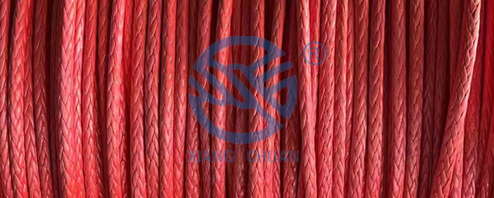
Mooring tails play a critical role in marine operations, acting as a vital link between a ship and its mooring system. They absorb dynamic loads, reduce stress on other mooring components, and ensure the safety and stability of vessels during berthing, loading, and unloading processes. Choosing the right mooring tails is not a trivial task; it requires a comprehensive evaluation of multiple factors to avoid equipment failure, operational disruptions, and potential safety hazards. This article explores the key considerations that ship operators, port managers, and marine engineers must take into account when selecting suitable mooring tails.
1. Vessel-Specific Requirements
The first and foremost factor to consider when choosing mooring tails is the specific characteristics of the vessel they will serve. Vessel type, size, and operational purpose directly influence the load capacity, length, and design of the required mooring tails.
For large vessels such as container ships, bulk carriers, or oil tankers, mooring tails must be capable of withstanding significantly higher tensile loads. These vessels often have a larger displacement, meaning they exert greater forces on the mooring system, especially in rough weather conditions. In contrast, smaller vessels like coastal ferries or fishing boats require mooring tails with lower load capacities but may prioritize flexibility and ease of handling.
The vessel’s mooring configuration is another critical aspect. Some ships have a fixed number of mooring lines, each with specific roles (e.g., head lines, stern lines, spring lines), and each line may require a mooring tail with unique properties. For example, spring lines, which prevent the vessel from moving forward or backward, need mooring tails that can absorb longitudinal loads effectively. Additionally, the location of mooring bitts and fairleads on the vessel determines the angle at which the mooring tail will operate, affecting its stress distribution and durability.
Operational frequency also matters. Vessels that berth frequently, such as cruise ships or container ships in busy ports, subject their mooring tails to repeated stress cycles. In such cases, mooring tails with high fatigue resistance are essential to ensure long-term performance and avoid premature failure.
2. Environmental Conditions
Marine environments are harsh and varied, and environmental conditions have a profound impact on the performance and lifespan of mooring tails. When selecting mooring tails, it is crucial to assess the typical and extreme environmental conditions of the ports or areas where the vessel will operate.
2.1 Weather and Sea Conditions
Wind speed, wave height, and current strength are primary environmental factors that influence mooring tail selection. In areas prone to strong winds (e.g., coastal regions with frequent storms) or high waves (e.g., open-sea berths), mooring tails must have high elasticity and energy absorption capacity to handle sudden, dynamic loads. For instance, in hurricane-prone zones, mooring tails made from materials with excellent stretch properties can reduce the impact of gusts and wave-induced movements on the vessel and mooring system.
Temperature fluctuations also affect mooring tail performance. In cold regions, some materials may become brittle, reducing their flexibility and load-bearing capacity. Conversely, in hot climates, prolonged exposure to high temperatures can cause material degradation, such as melting or weakening of synthetic fibers. Mooring tails designed for extreme temperatures often incorporate special additives or coatings to maintain their mechanical properties.
2.2 Chemical Exposure
In ports where vessels handle chemicals, oil, or other hazardous substances, mooring tails may be exposed to corrosive or toxic materials. For example, in oil terminals, mooring tails can come into contact with crude oil or petroleum products, which can degrade certain synthetic materials over time. In such cases, it is essential to select mooring tails made from chemical-resistant materials, such as polyester or polyamide, which can withstand exposure to oils, solvents, and other corrosive agents without significant damage.
Saltwater corrosion is another universal challenge in marine environments. Even in ports with no chemical handling, saltwater can corrode metal components of mooring tails, such as shackles or connectors. To mitigate this, mooring tails should be equipped with corrosion-resistant hardware, and regular maintenance (e.g., cleaning and lubrication) should be scheduled.
3. Material Properties
The material of a mooring tail is a key determinant of its performance, durability, and suitability for specific applications. Common materials used in mooring tails include synthetic fibers (e.g., polyester, polyamide, polyethylene) and natural fibers (e.g., hemp, sisal), although natural fibers are less commonly used today due to their lower strength and susceptibility to rot. When evaluating material options, several properties must be considered.
3.1 Tensile Strength and Elasticity
Tensile strength refers to the maximum load a mooring tail can withstand before breaking, while elasticity (or stretch) is the ability of the material to deform under load and return to its original shape. These two properties are closely related and critical for absorbing dynamic loads.
Polyester is one of the most widely used materials for mooring tails due to its excellent balance of tensile strength and elasticity. It has a high breaking strength and moderate stretch (typically 10-15% at maximum load), making it suitable for a wide range of vessels and environmental conditions. Polyamide (nylon) has higher elasticity (up to 25-30% stretch) and good shock absorption, making it ideal for applications where dynamic loads are frequent, such as in rough seas. However, polyamide has lower UV resistance than polyester, so it may not be suitable for long-term exposure to direct sunlight.
Polyethylene, particularly high-molecular-weight polyethylene (HMPE), offers extremely high tensile strength and low stretch (around 3-5%). It is lightweight and resistant to UV radiation and chemicals, making it a good choice for large vessels or applications where weight is a concern. However, HMPE has lower abrasion resistance than polyester, so it may require additional protection (e.g., sleeves) in high-wear areas.
3.2 Abrasion Resistance
Mooring tails are often in contact with rough surfaces, such as mooring bitts, fairleads, or the seabed, which can cause abrasion over time. Abrasion resistance is the ability of the material to withstand wear and tear, and it is a critical factor in determining the lifespan of a mooring tail.
Polyester has good abrasion resistance, making it suitable for most standard mooring applications. HMPE, while strong, is more susceptible to abrasion, so it is often used in conjunction with protective covers or sleeves. Natural fibers have poor abrasion resistance and are prone to fraying, which is one of the main reasons they have been replaced by synthetic fibers in modern mooring systems.
3.3 UV and Weather Resistance
Long-term exposure to sunlight (ultraviolet radiation) can cause material degradation, leading to a reduction in strength and elasticity. UV resistance is therefore an important consideration, especially for mooring tails that are exposed to direct sunlight for extended periods (e.g., in open ports or on vessels with exposed mooring systems).
Polyester and HMPE have excellent UV resistance, with minimal degradation even after years of exposure. Polyamide, on the other hand, is more sensitive to UV radiation and can lose strength over time if not protected. To enhance UV resistance, some mooring tails are treated with UV-stabilizing additives or coated with a protective layer.
4. Load Capacity and Safety Standards
Mooring tails must be selected based on the maximum expected load they will encounter during operation. This load, known as the design load, is determined by a combination of the vessel’s displacement, environmental conditions, and operational activities. It is essential to choose mooring tails with a load capacity that exceeds the design load to ensure a safety margin.
The safety margin, often expressed as a factor of safety, is a critical consideration in mooring system design. Most marine standards recommend a factor of safety of at least 2.5-3.0 for mooring tails, meaning the breaking strength of the tail should be 2.5 to 3 times the maximum expected load. This ensures that the mooring tail can withstand unexpected loads, such as sudden gusts of wind or wave surges, without failing.
In addition to load capacity, mooring tails must comply with international safety standards and regulations. Organizations such as the International Organization for Standardization (ISO), the International Association of Classification Societies (IACS), and local port authorities have established guidelines for the design, testing, and use of mooring equipment. For example, ISO 13075 specifies the requirements for synthetic fiber mooring lines, including mooring tails, covering aspects such as material properties, testing methods, and labeling. Compliance with these standards ensures that the mooring tails meet minimum safety requirements and have been tested for performance under various conditions.
5. Installation and Maintenance Requirements
The ease of installation and maintenance of mooring tails is another factor that should not be overlooked. Mooring tails that are difficult to handle or require complex installation procedures can increase operational time and costs, while those with high maintenance demands can lead to frequent downtime.
5.1 Installation Considerations
The weight and flexibility of the mooring tail affect its ease of installation. Lightweight materials such as HMPE are easier to handle and deploy, especially for large vessels where multiple mooring tails may be required. Flexible materials, such as polyamide, can be bent and maneuvered more easily around mooring bitts and fairleads, reducing the risk of damage during installation.
The length of the mooring tail is also important. The length should be sufficient to allow for the vessel’s movement (e.g., due to tide changes or wave action) without causing excessive tension, but not so long that it becomes tangled or difficult to manage. The optimal length depends on the vessel’s size, the mooring configuration, and the environmental conditions of the port.
5.2 Maintenance Requirements
Regular maintenance is essential to ensure the performance and safety of mooring tails. The maintenance requirements vary depending on the material, with some materials requiring more frequent checks than others. For example, polyamide mooring tails may need to be inspected more frequently for UV damage, while HMPE tails require checks for abrasion.
Common maintenance tasks include visual inspections for signs of damage (e.g., fraying, cuts, or discoloration), cleaning to remove salt, dirt, or chemical residues, and lubrication of hardware components (e.g., shackles, connectors). Some materials may also require periodic testing, such as tensile strength tests, to verify their performance over time.
When selecting mooring tails, it is important to consider the availability of maintenance resources and the cost of maintenance. Mooring tails with low maintenance requirements, such as polyester, may be more cost-effective in the long run, especially for vessels operating in remote areas where maintenance services are limited.
6. Cost and Long-Term Value
Cost is always a consideration in any purchasing decision, but when selecting mooring tails, it is important to look beyond the initial purchase price and consider the long-term value. A cheaper mooring tail may have a shorter lifespan, higher maintenance costs, or a higher risk of failure, leading to higher overall costs in the long run.
The cost of mooring tails varies depending on the material, size, and manufacturer. Synthetic fibers such as polyester are generally more affordable than HMPE, but HMPE offers higher strength and durability, which can justify the higher initial cost for certain applications. For example, in large vessels or harsh environments, the longer lifespan of HMPE mooring tails may result in lower replacement costs over time.
When evaluating cost, it is also important to consider the potential costs of failure. A mooring tail failure can lead to vessel damage, cargo loss, environmental pollution, or even human injury, all of which can have significant financial and reputational consequences. Investing in high-quality, suitable mooring tails can help mitigate these risks and provide better long-term value.
Conclusion
Choosing suitable mooring tails is a complex process that requires a thorough understanding of the vessel’s requirements, environmental conditions, material properties, load capacity, installation and maintenance needs, and cost considerations. By carefully evaluating each of these factors, ship operators, port managers, and marine engineers can select mooring tails that ensure the safety, efficiency, and reliability of their mooring systems.
In today’s dynamic marine industry, where vessels are becoming larger and environmental conditions are increasingly unpredictable, the importance of selecting the right mooring tails cannot be overstated. A well-chosen mooring tail not only protects the vessel and its crew but also contributes to the smooth operation of ports and the sustainability of marine operations. By prioritizing safety, durability, and long-term value, stakeholders can make informed decisions that benefit their operations and the marine industry as a whole.
Indirizzo:
Strada No.8 Chengnan, parco industriale di Chengnan, contea di Baoying, Jiangsu Cina
E-mail:
E-mail1:vanzer@xcrope.com Vanzer Tao
E-mail2:sales@xcrope.com Wang Peng
E-mail3:grace@xcrope.com Grace Li
E-mail4:info@xcrope.com David Cheng
Telefono aziendale:
+86-514-88253368
Ufficio vendite all'estero:
+86-514-88302931


Copyright di © Jiangsu Xiangchuan Rope Technology Co., Ltd. | Tutti i diritti riservati
Questo sito utilizza i cookie per assicurarti la migliore esperienza sul nostro sito.
 English
 Español
 Portugues
 Pусский
 Français
 Deutsch
 日本語
日本語 한국어
한국어 العربية
 Ελληνικά
 Polski
 Türk dili
 Indonesia
 Melayu
 Tiếng Việt
 বাংলা
বাংলা norsk
norsk Română
 Azərbaycan
 中文站
中文站
 +86-514-88253368



 Telefono
Commento
(0)